



.svg)
.svg)
.svg%201.svg)



Get Business Email
No domain name required
Showcase your skills with a website
Build one using Neo Stes

What if your photography website could do more than display images? What if it could convey your style, build credibility, and turn visitors into clients even before the first message is delivered? A photography site is not merely a gallery in a visually-saturated online environment. It is a market and customer-seeking platform that has a direct impact on reservations.
With more and more clients learning about photographers on the internet, the ones who have well-considered photography portfolio websites have a definite advantage. Effective photography website design makes the visitor grasp your taste, gauge professionalism, and confidently take the next step. Find out how effective photography websites turn visual storytelling into real opportunities.
Summary
A photography website serves as the online residence of photographers, studios, and creative professionals. It enables prospective customers to see portfolios, learn about services, and get in touch anytime. The process of creating a photography site usually starts with finding a domain name, hosting, and a website builder.
The use of modern AI-powered and no-code website builders has allowed photographers to build professional portfolio websites without involving the services of developers or agencies. Through these tools, it is easier to design, launch, and maintain websites that enable the support of consistent inquiries and bookings.
Here’s how you can make your photography website inspirational and conversion-focused:
- Present a clear photographic style and niche on the homepage.
- Sort portfolios by genre, project, or type of client.
- Create testimonials, client logos, or published features to create trust.
- Include strong calls to action such as “Book a Session” or “Request a Quote”.
- Ensure fast loading and mobile-first image performance.
In case you are seeking websites that provide domain registration, hosting, and site building at a single location with customizable themes, you can consider Neo Sites.
What is a Photography Website?
A photography site is a focused website that photographers and studios use to present work, promote services, and generate customers.
A typical photography website includes:
- A clear, creative positioning or niche.
- Portfolio galleries or featured projects.
- About the artist's background.
- References, media coverage, or a list of clients.
- Contact or booking options.
Unlike social media feeds, photography portfolio websites are fully owned and designed for long-term brand building and client conversion.
Benefits of Having a Photography Website
Below are the key benefits of having a photography website and how they support visibility, credibility, and client acquisition:
- Full Control Over Visual Presentation
A photography website provides total flexibility in the presentation of images, arrangement, and framing of images in a story. Photographers can control sequencing, size of the image, space, and the background to direct emotional influence.
There are no algorithms, advertisements, or competing content that distract attention, which is why, unlike the social platforms, the work can be viewed as it was intended to be.
- Increased Professional Credibility
A unique photography website represents the seriousness of work and professionalism. The portfolio presentation, service definition, testimonials, and client logos create trust even before a conversation takes place.
For both studios and independent photographers, a polished site can serve as the initial filter of credibility that clients apply when making the decision of whom to reach out to.
- Better Discoverability Through Search
Optimized photography websites attract high-intent visitors from search engines who are actively looking to book. Ranking on niche-based and location-based queries, photographers can attract people with definite demand instead of passive social media users. This leads to a reduction in the number of inquiries and an increase in the number of qualified inquiries.
- Conversion-Focused Client Acquisition
Photography websites are designed to lead visitors to take action. Systematized service pages, request forms, reservation links, and transparent session information assist in transforming the interest in browsing into actual leads. Trust signals and strategic CTAs can minimize indecisiveness and accelerate the decision-making process.
- Centralized Brand and Portfolio Hub
A photography website is a one-stop shop of portfolio work, services, pricing context, and contact details. Such a centralized presence eliminates confusion and provides consistency across channels.
How Can a Photography Website Be Used?
Here is how photography websites support different goals and growth stages:
1. Portfolio Website
Portfolio websites are a curated exhibition of the best work by the photographer and are organized by genre, type of project, or type of client, including weddings, portraits, fashion, editorial, or commercial photography.
These websites focus on visual sequencing, regular styling, and the number of images in a gallery, as they convey aesthetic and technical ability in a short period. A powerful portfolio site makes people immediately comprehend style, quality, and specialization, and does not require any further elaboration.
2. Studio or Business Website
Studio websites are created to facilitate commercial processes and team-based processes. They usually contain extensive service descriptions, pricing backdrop or packages, personnel profiles, studio qualifications, and booking or scheduling platforms. These websites are centered on transparency and credibility, which assist clients in reviewing what is offered, how it works, and navigating from the discovery to the booking process.
3. Personal Brand Website
Personal brand photography websites do not emphasize the work but focus on the photographer as a creative person. They share artistic vision, background, influences, and philosophy with chosen projects.
This format is particularly useful among independent photographers, teachers, and creators who desire to create long-term recognition, thought leadership, and greater connection with the audience.
4. Client Acquisition Website
Websites that are client acquisition-oriented are mostly created with the aim of creating qualified inquiries. They take the visitors through understandable service descriptions, use cases, price indicators, and guided inquiry forms to sift intent prior to contact.
The use of strategic CTAs, testimonials, and frequently asked questions helps to minimize the friction and make sure that the incoming leads can be fitted with the services and availability of the photographer.
5. Editorial or Fine Art Platform
Long-form projects, conceptual series, exhibitions, or personal work are published in editorial and fine art photography websites. These platforms focus more on narratives, sequencing, and narrative context rather than conversion.
Through their in-depth presentation of work, photographers establish artistic authority, critical recognition, exhibition, publication, and collaboration opportunities.
Best Photography Website Examples
Here are some of the best photography website examples that demonstrate strong visual presentation and conversion-focused design:
1. Peter McKinnon
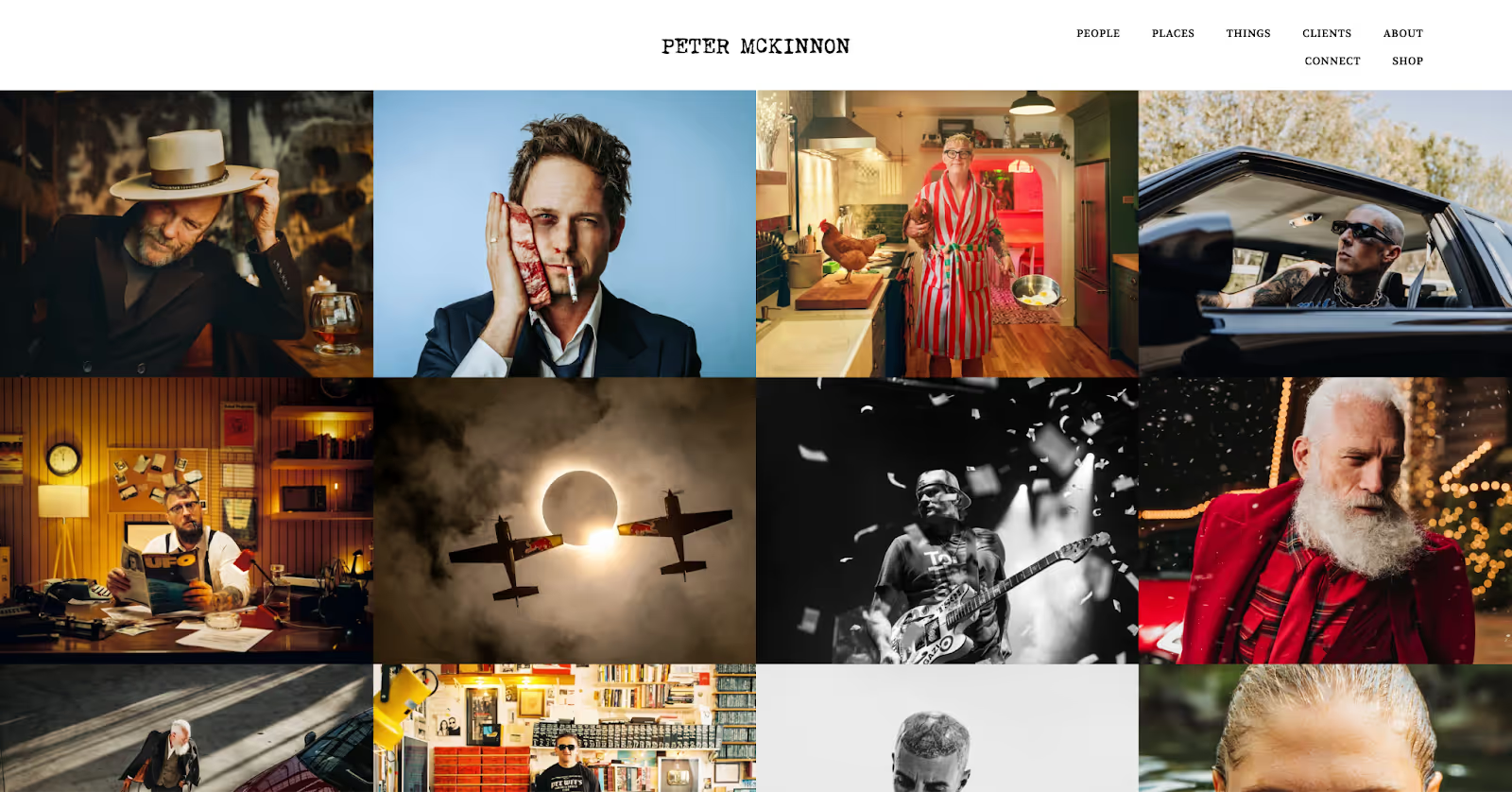
The website created by Peter McKinnon is aimed at creative expression and commercialization.
- The homepage produces instant visual effects with a powerful impact by the use of bold imagery, high contrast, and massive whitespace.
- Portfolio work, educational products, and brand collaborations are distinctly divided so that visitor intents can proceed organically.
The structured layout turns the website into a scalable business platform rather than a simple image gallery.
2. Annie Leibovitz
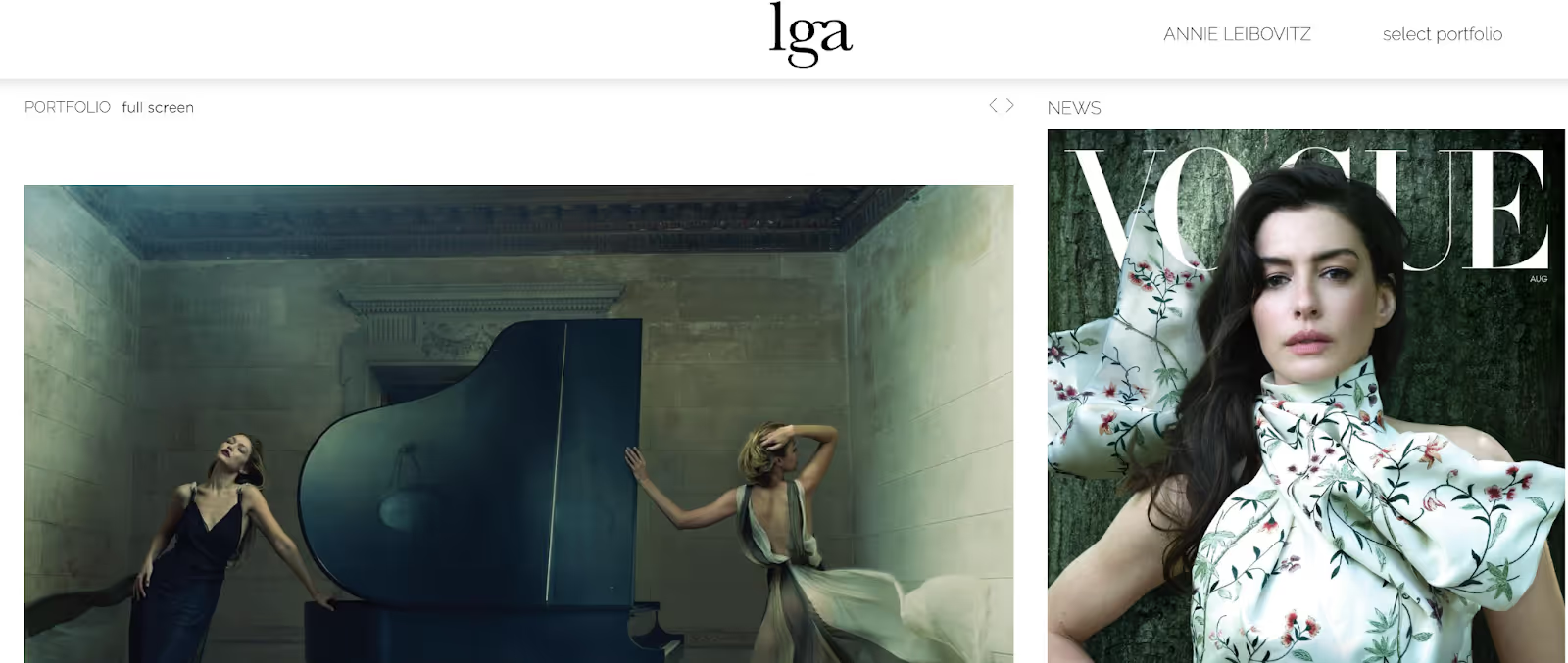
The Annie Leibovitz site has a sophisticated, editorial-based design that resembles the top-level print media.
- The presentation of projects is contextual and purposeful, which supports the authority of art and tradition.
- Navigation of this site is minimal; there are no superfluous interaction layers.
The work is presented in a way that has the power to have an emotional and cultural impact.
3. Brandon Woelfel
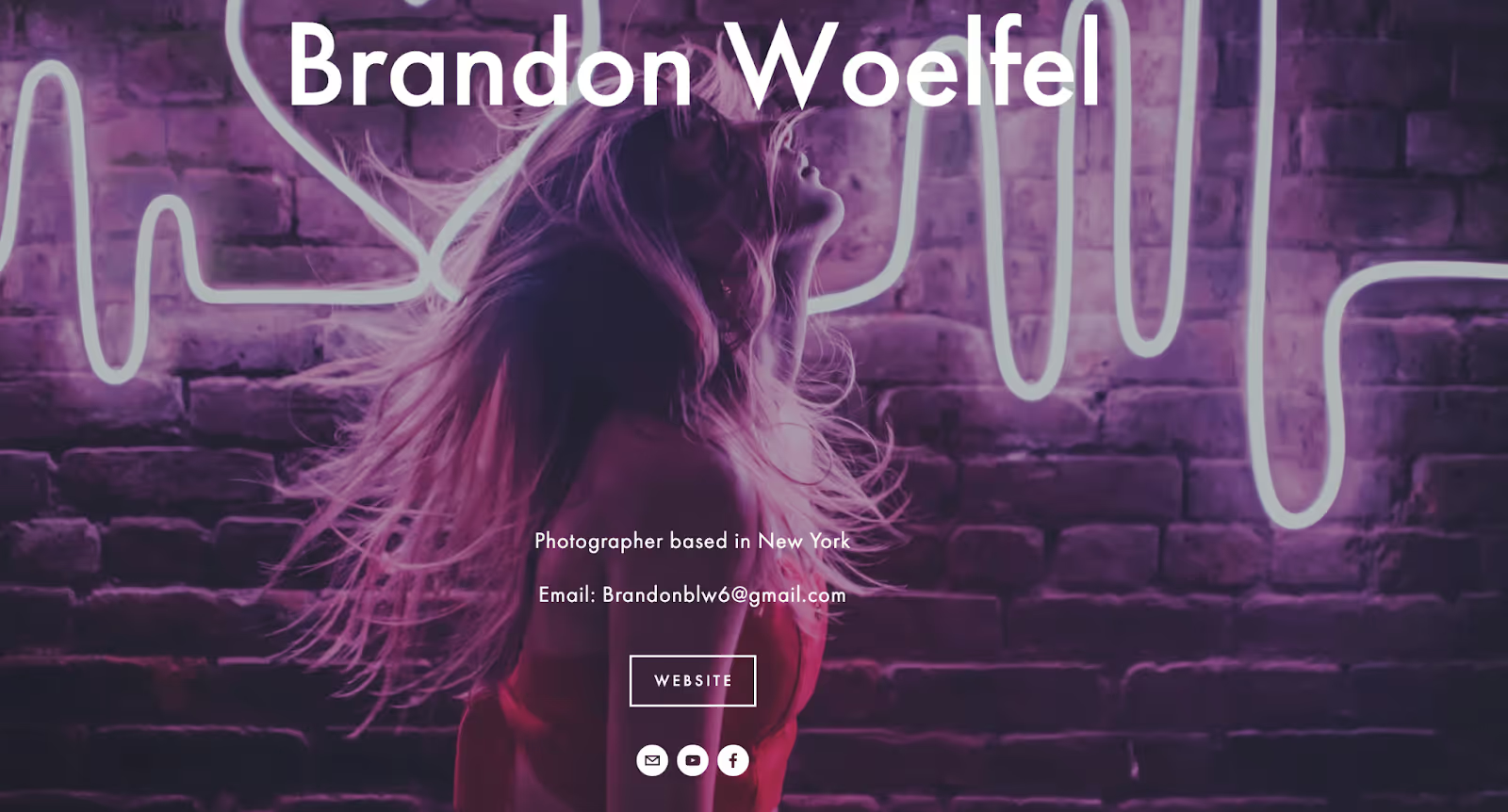
Brandon Woelfel’s photography portfolio website is built for instant aesthetic recognition.
- His visual style is instantly recognizable because of immersive galleries, full-bleed imagery, and vibrant color palettes.
- The design is sparse in words that explain the scenario.
The entire website has a consistent tone and mood that serves as the main branding aspect.
4. Magnum Photos
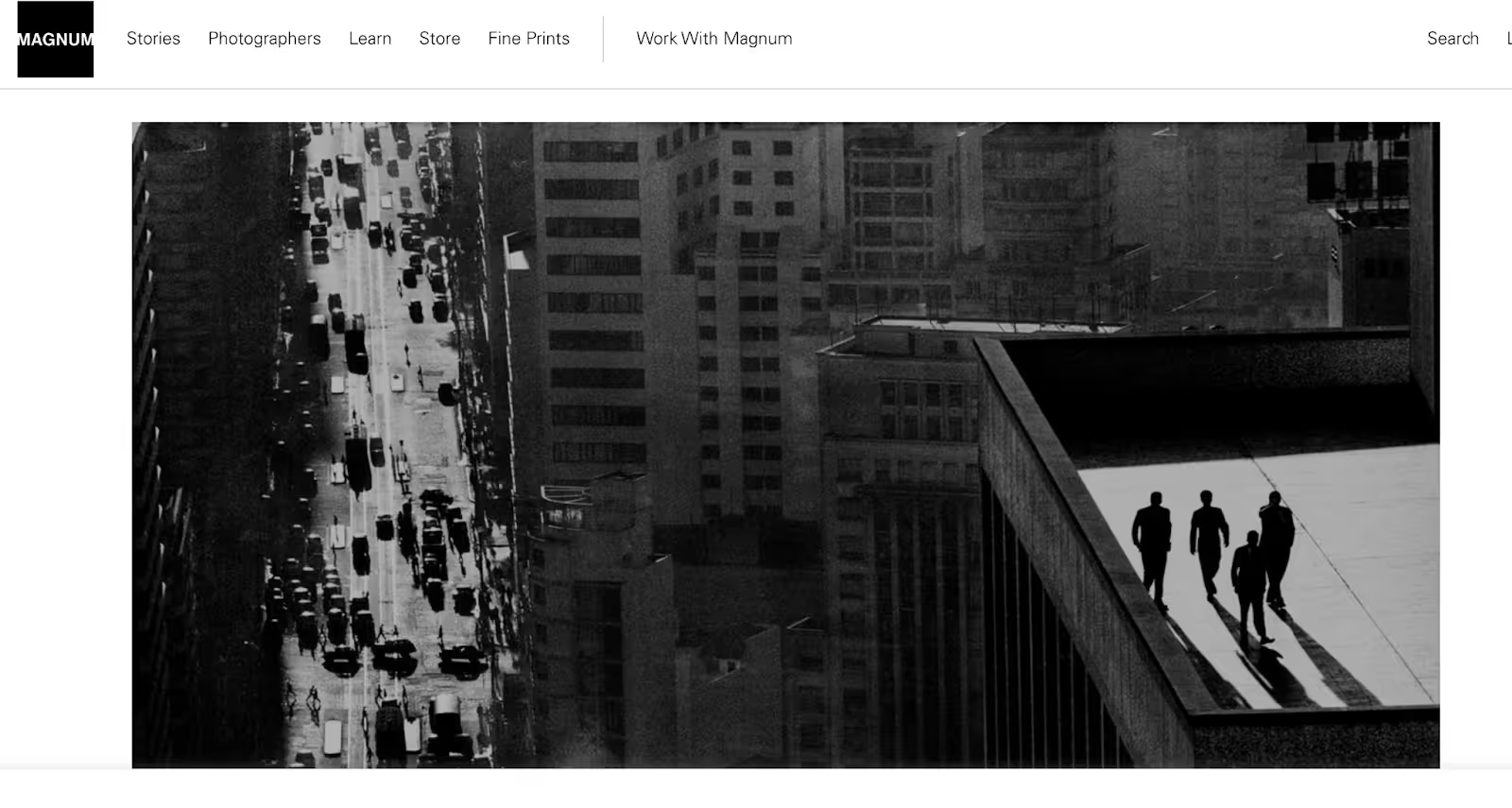
Magnum Photos demonstrates how photography websites can scale across multiple contributors without losing coherence.
- The platform is a mix of personal portfolios of photographers with editorial stories, archives, and collections.
- An active layout enables the exploration of photographers and stories with ease.
The website highlights that large-scale photography platforms can be structured and brand-consistent.
5. Chris Burkard
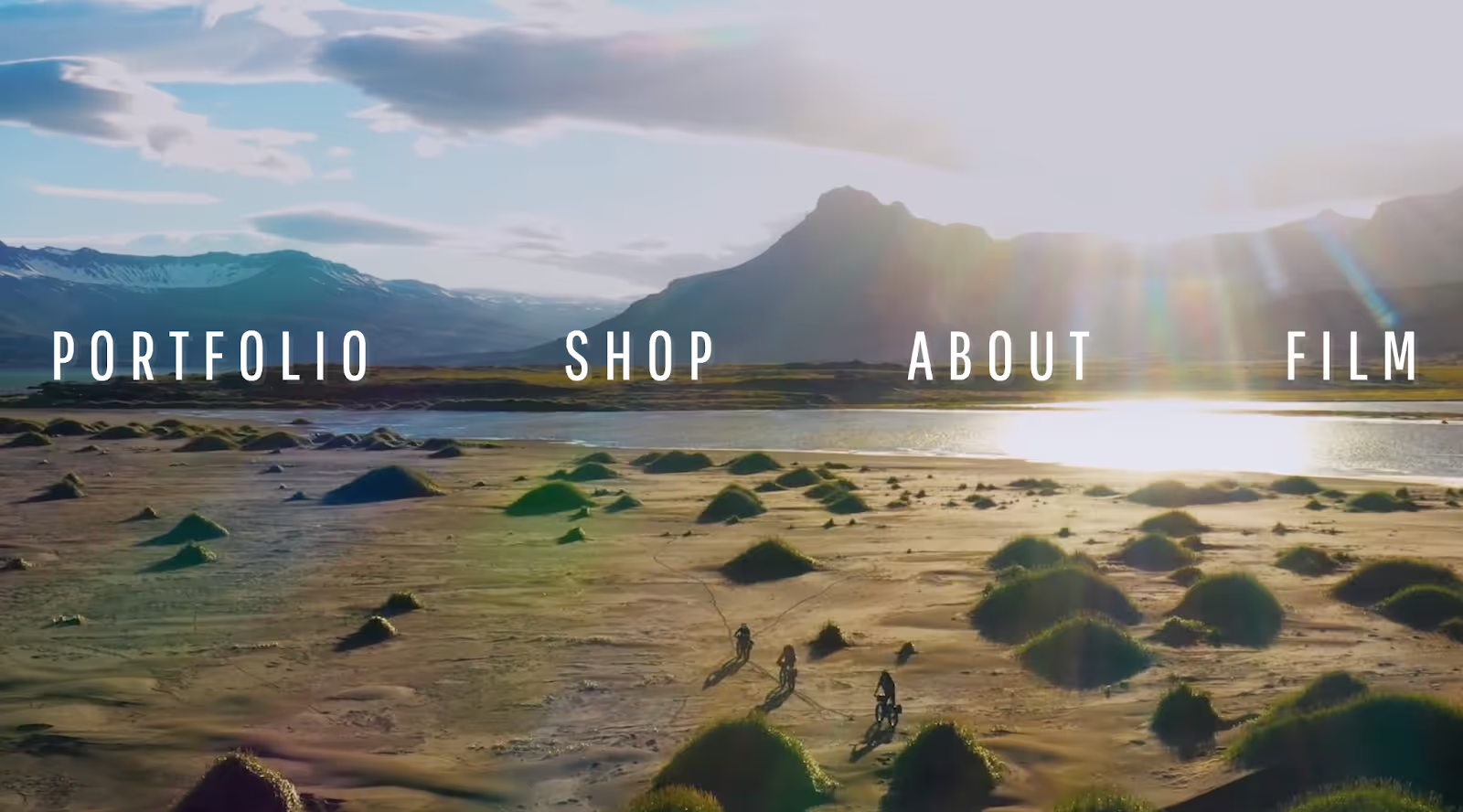
Chris Burkard’s website is a mixture of cinematographic narration and business transparency.
- Big images create an emotional background, and the separation between personal work, brand collabs, and business is created through clear navigation.
- The location manages to encourage artistic discovery.
The website is designed to attract and engage in collaborations around the world.
How to Create and Launch a Photography Website?
It is possible to build and launch professional photography websites (one-page or full websites) without any technical skills by using a reliable AI-powered site-building platform like Neo Sites.
Step 1. Visit Neo Sites and click on Try it yourself for free.

Step 2. Enter your business industry, such as Photographer or Photography Studio.

Step 3. Write a prompt describing your photography style and services.

Step 4. Choose a generated website design with tailored content and images, then click Edit this Design.
Step 5. Register your domain and publish your website.
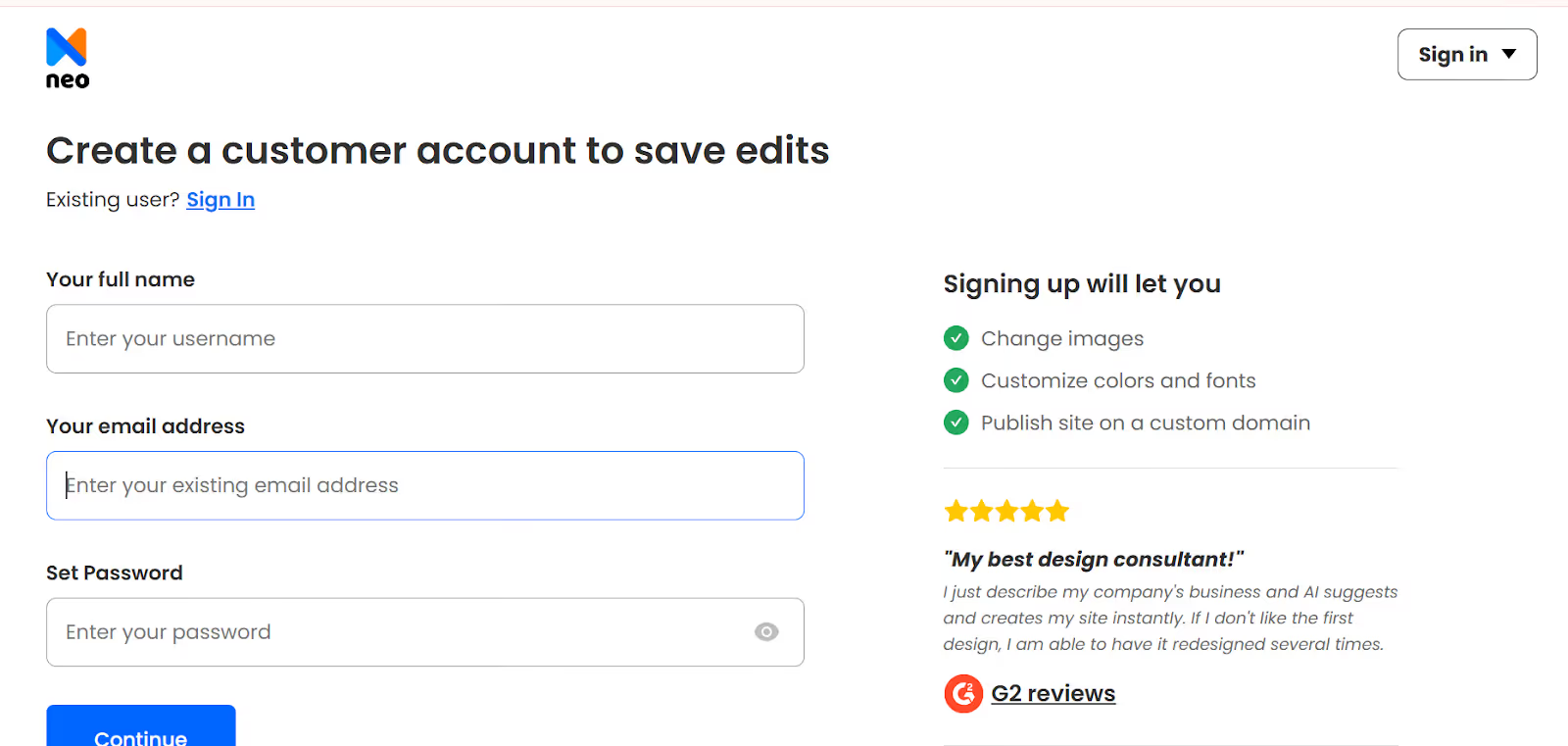
The drag-and-drop editor and AI content generator make it possible to customize the template by optimizing headlines, galleries, and CTAs for lead generation.
Photography Website Design Templates to Get Started
1. Photography Portfolio Template
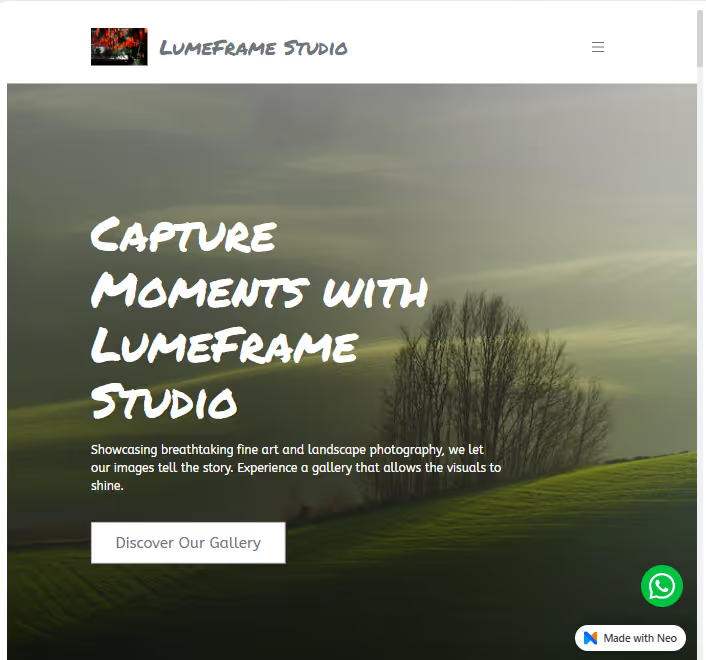
Template Link: Photography Portfolio
Photography portfolio templates are made to ensure that the photos are at the centre of the experience, and there is little interference with the visuals.
This sample template used a large image as the background, strong typography, and basic navigation to ensure focus on the piece. The galleries are added genre-based or project-based to allow the visitors to grasp the specialization of the photographer swiftly. Further, the CTA ‘Discover Our Gallery’ encourages visitor go through the portfolio.
2. Studio Website Template
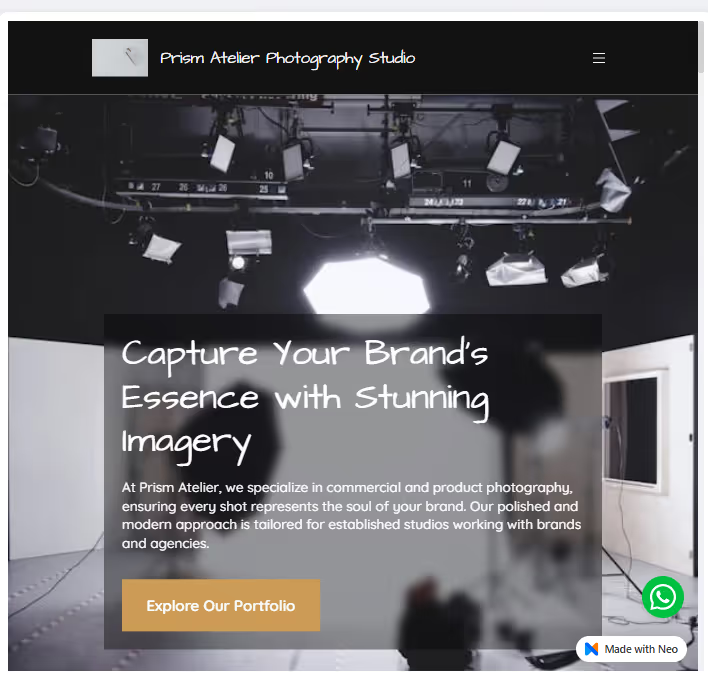
Template Link: Studio Website
Studio web templates are designed to suit photography companies that have specific services and accept regular bookings from clients.
This template has a defined hero-section that clearly outlines the services, approach, and for which customers they collaborate or work with. The strong black and white image in the background allows visitors to go through a studio experience, while the guiding call-to-action ‘Explore Our Portfolio’ motivates users to visit the portfolio section.
3. Editorial or Storytelling Template
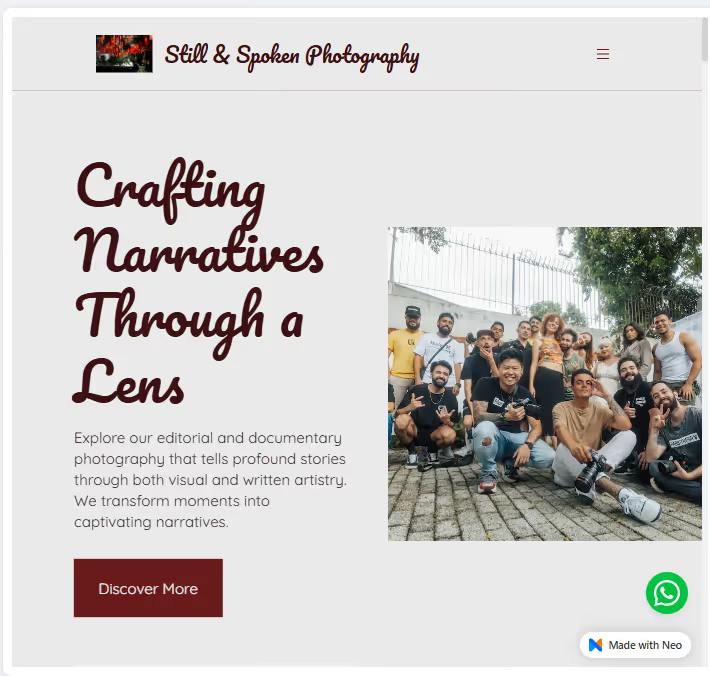
Template Link: Editorial or Storytelling
The editorial or narrative templates are developed to accommodate photographers who showcase work as stories and not as individual images.
The sample template endorses bold headlines, long-form formatting, content, and images that allow visitors to scroll through storytelling. The neutral colors allow readers to focus on the content and easily find a meaningful CTA to know more about the projects and services.
4. Personal Brand Photographer Template
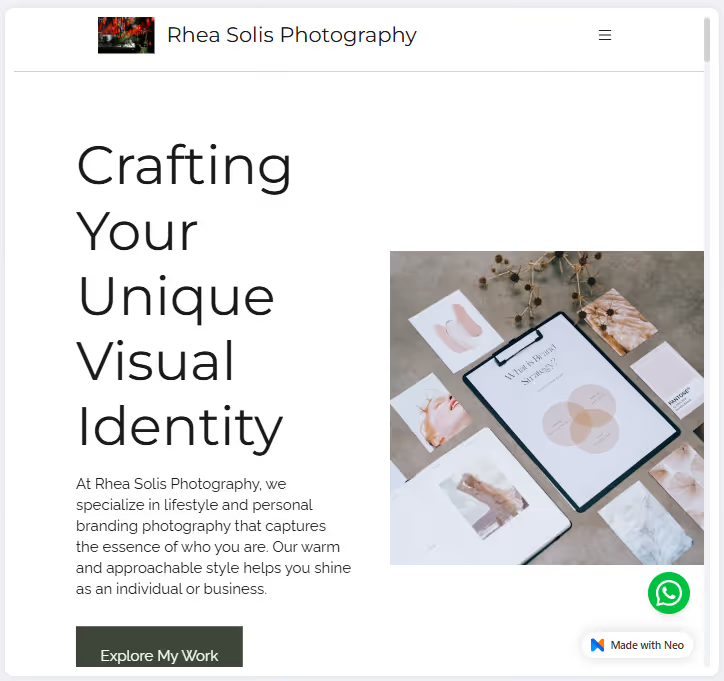
Template Link: Personal Brand Photographer
Personal brand photographer templates are devoted to the photographer themselves.
This template emphasizes philosophy of creativity, background, influences, signature style, and selected projects. The bold headline with a description about services and how the platform works gives visitors a clear idea about the areas of expertise of the photographer. The template can work best with photographers who desire to develop long-term recognition, build a personal identity, or collaborate with other businesses.
5. Booking-Focused Photography Template
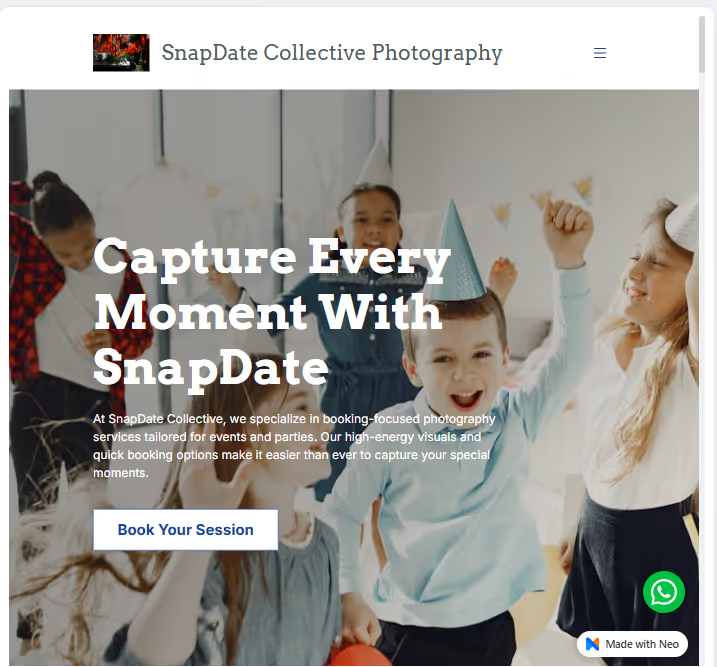
Template Link: Booking-focused photography
Photography templates that are booking-oriented are tailored to make inquiries and confirmations.
This sample template is ideal for a booking-focused photography website. The heading in the hero section is inviting with a welcoming image. The description below the headline provides a complete overview of what type of customers they provide services for, such as events or parties. The clear CTA ‘Book Your Session’ encourages visitors to take the next step quickly.
Things to Remember When Creating Photography Websites
Below are important things to consider when creating a photography website:
- Balance image quality with performance: Photographers need high-resolution images, which consume too much time and damage interactivity. Smart compression, newer image formats, and lazy loading can be used to maintain the visual impact and still keep the load time on all devices fast.
- Curate your portfolio instead of showcasing everything: A good photography website features your finest and most pertinent work rather than all the shoots that you have completed. Niche galleries enable your visitors to grasp your style and understand your quality work without being overwhelmed.
- Maintain consistent visual structure: Regular spacing, positioning, font, and design make it look professional and maintain the focus on the photos. Poor consistency in the design aspects distracts the visitors and undermines your brand perception.
- Design with mobile users in mind: The majority of visitors will access your photography site using mobile devices. The galleries must load quickly, the pictures must be scaled appropriately, and the navigation and calls-to-action must be conveniently placed on smaller screens.
- Keep navigation simple and intuitive: Visitors should reach your portfolio, services, and contact information in one or two clicks. Minimal navigation reduces friction and keeps the focus on your work rather than interface complexity.
Tips to Drive More Traffic and Increase Conversion Rates
Here are some important tips to improve traffic, performance, and conversions:
- Use niche and location-specific keywords: Targeting keywords related to your photography style and location attracts high-intent visitors who are actively looking to book a photographer, resulting in better lead quality.
- Place CTAs immediately after portfolio sections: Visitors are likely to act when they have completed browsing through your work. The presence of clear calls to action immediately after galleries transforms interest into inquiries more effectively than hidden contact links.
- Add trust signals near inquiry points: Published features, client logos, testimonials, or awards placed near contact forms diminish the hesitation and increase credibility at the point of decision.
- Ensure fast loading with performance optimization: Speed has a direct impact on interaction and conversion. Minimalistic designs, laziness, and optimized images retain visitors and prevent drop-offs.
- Simplify contact and inquiry forms: Brief and to-the-point forms reduce friction and augment submissions. Requesting only the necessary details simplifies the process for potential clients to reach out quickly.
The Bottom Line
Photography websites are essential tools for visibility, credibility, and consistent client acquisition. With modern tools like Neo Sites, photographers and studios can build visually compelling, high-performance websites without technical barriers. When strong design meets clear positioning, photography websites become powerful growth assets.
FAQs
1. Why do photographers need a dedicated website?
A photography website provides complete control over the portfolio display, establishes credibility, and transforms the visitors into clients without using social media algorithms. It is also a long-term brand asset in which photographers can display their best work without platform restrictions.
2. What should a photography portfolio website include?
Well-defined niche, selected galleries, client testimonials, service details, and convenient contact or reservation. These are some of the elements that enable the visitor to quickly understand the photographer’s style, professionalism, and suitability for their needs.
3. How often should a photography website be updated?
Portfolios should be updated regularly with new projects, testimonials, and services to stay relevant and trustworthy. Frequent updates also signal active practice and improve search visibility over time.
Get Business Email
No domain name required
Showcase your skills with a website
Build one using Neo Stes
